Thank you for visiting the website of Bill Rapp, author of the “Suburban Detective” series featuring Bill Habermann and set outside Chicago, and the “Cold War Thriller” series. The first book, Tears of Innocence, takes place in Berlin in the months immediately following the end of the war and features a young American military intelligence officer, Karl Baier. The second novel, The Hapsburg Variation, which was released at the end of 2017 under the Coffeetown Press label, takes the story forward to 1955 Vienna, where Baier is now the deputy chief of station for the CIA. Keeping with the Berlin theme, Bill also wrote Berlin Breakdown, a novel set during the fall of the Wall, an event Bill experienced first-hand while serving at the U.S. Mission Berlin from 1989 tom 1991.
Please feel free to explore further to learn more about the books and upcoming events.
What’s New
Check out BooksRadar.com for detailed descriptions of each of Bill Rapp’s published books
Chief of the CIA Station in Prague for nearly a year, Karl Baier has been following the Dubcek Government’s efforts to reform his country’s rigid communist system and move closer to Western Europe. Washington realizes that this program could be a game-changer in the Cold War and is eager for information and insights into Dubcek’s prospects. On a warm August night, however, the Soviet Army rolls into Czechoslovakia to crush the reform program and ensure the country’s loyalty to the Warsaw Pact. Baier must move quickly to protect his officers, his family, and the Station’s Czechoslovak allies and assets from death and deportation by the Red Army and Soviet intelligence. At the same time, Baier must determine who his true friends are among the local officials and the foreign agents spread throughout the country’s capital. Only when he reaches the Austrian border is Baier certain whom he can trust. Even then, new surprises await.

Additional Review:
I just finished reading your latest. Great work! Thoroughly entertaining plot and characters. Really enjoyed it!
It also brought back memories. First, of my one and only “official” trip to Prague back after the Wall came down, when Phil Roundtree and I spent two fascinating days there meeting with Czech officials, a large group of very young media people, and, on the second day with members of Czech military intelligence. The excitement of being part of something radically new was palpable in all our encounters. Then, after I retired, Margie and I were back in Prague as tourists on two river boat cruises.
But my real memory is of the very Prague Spring in your book that I encountered as a graduate student at GWU’s Institute of Sino-Soviet Studies in 1968. I was midway through work on my master’s thesis, which was focused on the genesis and outlook for the Prague Spring. On August 20, 1968, my then-fiancee’s now wife’s birthday, she and I were driving across the 14th Street Bridge in DC back to Virginia after celebrating her birthday at our favorite DC dive. She had no expertise (she was a computer programmer) or background but believed the Soviets wouldn’t let it last. I was the forever optimist that I still am today. Midway across the bridge the news of the Soviet invasion came on the car radio! At that moment, I probably shared many of the same emotions as the characters in your book!
The next morning, I had an appointment with my thesis advisor, a Hungarian immigrant who also was an Agency contractor. When I arrived at his office, he looked up and said, “Well, Mr. Carson, I guess you probably should alter the focus of your thesis”! I did. He helped me by introducing me to some FBIS analysts who helped me search for unclassified material, and my thesis became an assessment of Soviet political and military preparations for the invasion. The paper was well received by the panel that reviewed it, and I apparently also satisfied them during my orals when we discussed the paper. I think it may still be somewhere in our boxes in storage.
I credit that experience with driving my decision to join the Agency after I got off of Army active duty.
Thanks so much, for bringing all these memories flooding back!
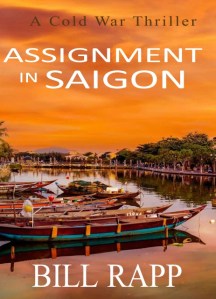
Summer, 1964: CIA officer Karl Baier is on a special assignment from the Director to prepare a field assessment on the situation in Vietnam and the prospects for the growing U.S. involvement as Washington moves to Americanize the war. Despite the specific focus and tight deadline, Baier is drawn into a dangerous operation that not only threatens his life but also holds deeper implications for the war itself and broader strategic challenges, of which Vietnam is only a part.
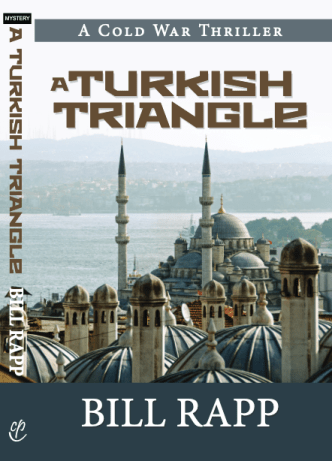

“CIA officer Karl Baier returns to Berlin to assist in the exfiltration of a KGB defector in the late summer of 1961, just as the new Wall is going up and the world of Cold War espionage is about to change forever. At the same time, Baier’s German-born wife asks him to help smuggle her parents out of East Germany, turning a difficult assignment into one that is all but impossible.”
“This is a book worth reading. It incorporates an abundance of historical facts, as well as the actors who were making conditions so dangerous. I must add that the author knows of what he writes, being a 35 year veteran of the CIA.”
Click here to read the full review of “The Budapest Escape” by Mary Ann Smyth for BookLoons

“I liked the writing, the post-war ambiance, the characters, and the nasty geo-politics well enough to be willing to think I should get the first novel and start over at the beginning…”
Click here to read the full review of “The Hapsburg Variation” from Historical Novel Society
Check out our new trade paperback edition of Tears of Innocence, now available for purchase

Check out our Events page for all upcoming events!

